Monday, May 23, 2016

f(x) - Pink Tape (2013)


f(x) has always stood out from the KPOP scene for having a sound that’s distinctly theirs in a world where changing ´concepts´ and styles after each new release is almost mandatory. The group was targeted, and arguably still is, as S.M. Entertainment’s weird offspring that gets the more experimental bits while others under the label get the more ´crowd-pleasing´ songs and, as the majority of the fans will tell you, due to this f(x) hasn’t always had the perfect management. The beginning was rocky for them – they made their debut as a quintet in 2009, a year many claim to be the year in KPOP, with a rather lackluster single and having to follow the footsteps of immensely popular groups didn’t really help either. It took more than 6 years for them to get a solo concert despite being extremely popular domestically and overseas, not to mention the fact that their fandom got an official name only this year (usually a necessity for rookie groups right off the bat). The winds seemed to be changing with their surprise summer jam Electric Shock in 2012 that had a solid EP to boot, however, it wasn’t until a year later with the release of their second full-length album Pink Tape that f(x) bloomed into an act no one could get enough of. Pink Tape seemed to be one of the best KPOP albums of 2013, if not of all time, and soon everyone was talking about the new trend setters. 
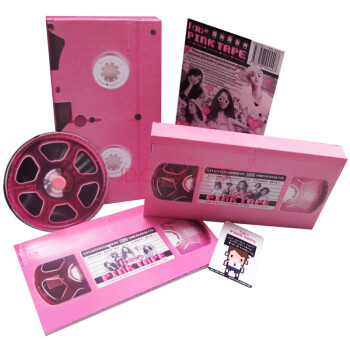
 Everything about this album release was compelling – the way they had hyped it up with an album highlight medley and an art film (a new sight in the industry during the time), the dreamy vintage vibe from the teaser pictures, the design of the physical album itself. No one had really imagined so much thought going into this comeback, so naturally people were excited beyond words.
The group has released 2 more albums after Pink Tape thus far, Red Light in 2014 and 4 Walls last year (now promoting as a four-member group), both charting well and getting quite a lot of critical recognition, especially international recognition, further proving them to be an ´iconic´ group in the scene, but in the eyes of most, nothing can touch Pink Tape. People are still standing by the fact that this album is a ´classic´, but was it really worth the buzz? Is it still worth the buzz?


The first track on the album is the lead single Rum Pum Pum Pum which was released with a pretty generic KPOP music video, meaning lots of colour, dancing, and weird scenes of the girls sniffing metallic flowers (thankfully the two more recent releases have had more thought put into their videos). The song itself is very true to what f(x) is known for - funky, sprinkled with somewhat odd transitions and harmonies, and layered with details that make the song rather interesting. The pre-chorus is sung in a vocal round which doesn’t happen in KPOP all that often and so makes for a nice surprise (and it’s no accident the song is called Rum Pum Pum Pum with those not-so-subtle influences of Little Drummer Boy), adding to that is the Middle Eastern flavour that gives the song a light exotic touch. As a whole, though, Rum Pum Pum Pum did feel a bit underwhelming for some, and I have to agree in a way, but when taking the song apart, f(x)’s true colours come through and it’s a delightful track. The lyrics are a creative take on the topic of first love as the girls compare it to ones wisdom teeth (a play on the Korean words love (sarang) and wisdom tooth (sarangni)):
Hello, you’ve probably heard of me at least once, your wisdom tooth/ You probably think you experienced it all when you were young/I’m a bit different, I pushed aside all the others and took my place/I will pierce through your heart’s wall and grow/Your head will hurt, you won’t be able to sleep/You won’t forget me easily, your true first love
Other than the brilliant Luna not getting to showcase her vocal talent like she does in other f(x) songs, there aren’t many glaring faults with this one. It’s not one of their utmost best lead singles, but it’s definitely not boring either.

Next up is Shadow that was featured in the art film which served as a teaser for the upcoming album. Not only did the song capture the aesthetics of the video to a T, it also made people have extremely high hopes for the whole album for it didn’t sound like the typical filler track you’d come to expect of KPOP albums. Apart from Luna, the group isn’t really known to be a vocal powerhouse, but the light, almost thin sounding vocals over of the eerie instrumental work perfectly for this song about a shy girl pretty much stalking her crush. While there isn’t really a high the song is trying to get to, it remains a fan favourite after all this time with its mellow feel and creepy lyrics.


The pace slowly picks up with a pop-rock piece called Pretty Girl. The intro of the song might be a tad bit misleading for what’s to come, but that’s f(x) for you. With a strong and bold pre-chorus, a simple but catchy chorus, and the empowering lyrics of breaking through a shallow world where people only focus on looks, Pretty Girl is a certified uplifter. While it might sound messy at times, the girls get to challenge their upper registers in this and Amber’s token rap, while not without faults, turns out pretty well.
The fourth track on the album is Kick that many consider to be just a speedy filler, but in my humble opinion gets the album back on the track of the electro territory usually associated with f(x)’s sound, along with the sing-talking and the sudden transitions. It’s not an easy listen, the chorus being the only part you’ll probably remember about the song, and if you aren’t really in the mood for chaos, Kick can sound just a bit too jarring.
Signal is the groovy disco-inspired track that is cleverly placed right after the experimental Kick for the listener to collect their thoughts and calm down after that mishmash of sounds. It’s not anything exceptional but it’s a nice song for some easy-listening and it’s one of the most consistent songs genre-wise on the album (which is why people might find it on the boring side).
Arguably the track that starts the second coming of the album is Step, a summery, infectious, energetic song that will at least get your head nodding along. The backing track might sound a bit dated now with that blaring saxophone, but in 2013 it was the shit. The teasing ´na na na´s in the verses make the song extra fun and since it's quite literally about strutting confidently around the city in comfy sneakers, Step offers an easy-going feel through the lens of a synthpop-driven track. 
The next song called Goodbye Summer features the vocals of a fellow labelmate D.O. from EXO and omits the vocals of Sulli and Victoria, the weaker vocalists of f(x), bringing us another calmer track without becoming stagnant. Krystal and Luna offer a lighter vocal side while D.O. and Amber try to bring some balance to the song with their lower ranges and the harmonies on this track are most likely the best the album has to offer. 
Airplane starts off soft but quickly rises to greater heights (pun intended) with its melodic sound and dubstep-done-right bits, channeling Zedd (most noticeably Clarity). The song takes you on a trip (seriously, they make it too easy) with the constant plunges and ascendings of the instrumental and it’s rather obvious why this track was promoted alongside the title song Rum Pum Pum Pum. It’s airy and bright while skillfully using the wide vocal range f(x) has to offer, making it a really enjoyable listen.


We move along to Toy, another disjointed song that holds up surprisingly well. While still having that explosive edge to it, every part manages to tie in with the other bits, even the weird dubstep breakdown, and I can’t help imagine what a wonderful performance track this would be. It’s frantic and all over the place, a perfect description of f(x)’s music overall, and follows the steps of Kick, only in a less jarring way. It’s quirky but Toy also in a way marks the inevitable decline of the album.
The spunky throwback No More is next and like Toy matched the feel of Kick, No More matches Signal in being one of the few ´genre-pure´ songs on the album. The ad-libs and harmonizations make it sound like it should fit into a musical, but surprisingly the demo for this song was supposed to end up on Ariana Grande’s album. Boyfriend Material (Grande’s version) differs from No More purely in terms of lyrics as Grande sings about her excitement over finding the perfect guy while f(x) sing about a fox-like girl who forgets about their friends as soon as she finds a new guy. 
Snapshot is almost like a second shot at a musical-inspired song until we reach the chorus and realize we are genre-bending again with ´the lovely f(x) ladies´. Would this have been a better fit for the 1st half of the album? Perhaps. The number still works nonetheless, maybe not having as much of an impact as it hoped it would, but it’s still an interesting track with some trademark chanting and sing-talking going on. 
The last song on the album is aptly named Ending Page, another pop-rock flavoured ballad, and right off the bat it sounds like a closing track. It’s not by any means a standout song and it’s not meant to be one – Ending Page is something to listen to while looking back, reminiscing about past events or in this case, thinking back to what song left the most impact on you and, more importantly, how f(x) has grown from release to release and how they will eventually mature even more as shown on Red Light and especially their latest album.

Pink Tape managed to capture f(x)’s eccentric style but also their confidence at trying to get better as well as maturing without losing their youthfulness and the end result definitely paid off. Daring to take risks and not be predictable in the world of KPOP worked for f(x) then and works for them now. Pink Tape’s influence on their future projects, and its influence on the whole genre in fact, should not be underestimated and something tells me it never will be.


Friday, May 20, 2016

The Jesus And Mary Chain - Automatic


The Jesus and Mary Chain (JAMC) is Scottish and the songs are written by brothers Jim and William Reid, with the rest of the lineup going through multiple changes since the group was formed in 1983 when everybody else was making electronic pop music. They used heavy guitar distortion sound effects and played their early shows with their backs to the audience (a foxy way to combat stage fright) causing the kind of spectators that needed to have an affectionate relationship with the live band, combined with their deafening performance, to get frustrated, resulting in media-exaggerated mayhem and granting JAMC the title of “the next Sex Pistols” and attracting more and more pissed of crowds to break stuff in the venues. Their debut album Psychocandy (1985) is basically a pop record dipped into layers of noise while the next albums have relatively less distortion, are more user-friendly and can also be listened to without a proper sound system. Surprisingly, Psychocandy sold fairly well, but their next albums proved to be less experimental. 

JAMC’s Automatic (1989) is quite automatic indeed. The song structures are simple, a drum machine is used instead of a person bashing away (except for “Gimme Hell”), a synthesizer for bass guitar and perhaps because of these instrumental elements, the tunes can sound relatively repetitive and dry. That is not to say that the album is complete trash though, I actually think it’s a rather pretty effort and the record compiles for a cool late-evening listening, the tracks knit together tightly promoting an ‘I don’t shower that often’ sound. Released four years after Psychocandy, Automatic is a lot more teddy-bear sweet and goes to show how their claims of “wanting to write hit pop songs” were not just comical exaggerations made by the noisiest band on earth. There’s not much to be said about the individual tracks as they all kind of blend together; the most noticeable changes as the songs alternate being the tempo, drum machine fills and vocal intensity. Automatic did produce their best known single at that time though, “Head On” which was also covered by Pixies and there’s also an acoustic song “Drop” making for an interesting twist before the closing instrumental kicks off. The lyrical content of the album deals with general themes such as dissatisfaction, pensiveness, love, Jesus, death, strolling around, doubting ones senses and also some mumbling. Two songs, “Halfway to Crazy” and the follow-up “Gimme Hell” both feature the same phrase “tongue tied”, but whether this was an artistic choice or simply carelessness is probably an intentional puzzle by the Reids.

While being nothing as grand as Psychocandy, Automatic is a fine piece in their catalogue of 6 albums. After disbanding in 1999, JAMC reformed in 2007, released a greatest hits album in 2010 and in September 2015 Jim Reid announced the band was in studio recording a new album.

Wipers - Youth of America


Covered under the sandstormed history of rock n’ roll is a band that never really reached a wider audience, yet at times it feels as if they conquered the world at some point because the people who have heard of them exhibit their find in a manner an archeologist would display a long lost navel stud of Queen Cleopatra – and with good reason, the band definitely deserves the acclaim. 

Wipers hail from Portland, a former punk rock capital of the West Coast US, releasing six albums throughout the 80’s and three more in the 90’s. The main reason for the phantom-like existence of Wipers are conscious decisions made by frontman Greg Sage to avoid touring, interviews, photo-shoots, music videos and the glamour of rock n’ roll. He thought of music as art rather than entertainment and shunning publicity would help the listener experience more intimacy and find deeper meaning while listening to their records. Sage was endorsed but an outcast at the same time among the highly prejudiced punk rockers, wearing the most uncool clothes he could find instead of a leather jacket, writing longer, more structurally complicated songs and having extra guitar gimmicks which was all uncommon amidst the army of hardcore punk bands with an in-your-face attitude. Youth of America (1981) features these characteristics most prominently, with an addition of a subtle piano in some parts and occasionally elongated verses, notably the title track of the album which is 10 minutes long and has a stretch of peculiar soundscapes and disciplined drums and bass guitar components.

The album has a melancholic if not a pessimistic tone with occasional bursts of frustration that is the leitmotif of most Sage’s work, without having an overly wailing impression at all but rather a mystic obscurity. The music is like a slow and steady truck, roaring around the corner, while always seeming to speed up to run you over. The unique sound of Wipers owes much to the technological approaches Sage used which were considered “prehistoric” by his contemporaries in the recording studios at the time, while Sage saw great opportunities in using the certain equipment called “vacuum tube direct” and studying it carefully, experimenting with it and building things he needed for his specific idea of what sounded good.
The first one on the record, “Taking Too Long” starts off quite mellow, but immediately hints in the chorus that something is about to break, it’s a song that yearns for things to change and as the choruses progress after each verse they become more powerful and grow into a repetitive expression of dissatisfaction with the current state of being. The second number kicks off more vigorously and asks a similar question of “how long can this be?” throughout the choruses and with the third song continues to express confusion and a gut-wrenching endeavor to make sense of it all. “When It’s Over” changes the pace of the album with having a long intro while the low muttering whispers of quite incomprehensible lyrics are compensated by the cosmic-screeching  guitar, showing the mastery Sage has over making his instrument sound like an eel being burned alive. The penultimate “No Fair” attempts to be the slow one of the album with a serene intro, but soon enough, seemingly whether it wants to or not, drives into the same pattern of pacing restlessness. The last piece stands on its own, switching from an inward perspective of the earlier songs to a pessimistic view on the narrator’s surroundings. Being fed up with an oppressive force, the song seems to address the “youth of America” to stand up for themselves and improve their circumstances. The long ballad takes the turmoil of the other songs and says “enough, I can’t take this anymore, things need to change”, this is the revolution “Taking Too Long” was yearning for. The songs’ lyrics can of course be interpreted in many different ways as most of them are cryptically poetic and provide a canvas and tools for the listener to use their own imagination. 

While Wipers successfully didn’t make it big commercially, they are considered to be one of the most influential bands for the explosive grunge scene of the 90’s and late 80’s particularly because of the “music is art” approach which was an inspiring attitude for the young bands who had among them Nirvana, whose frontman Kurt Cobain organized a fourteen-song tribute album by various artists. Nowadays Greg Sage is located in Arizona as he attends to Zenorecords, his studio where he sells Wipers related merchandise, CD’s and vinyls as well as solo-albums.

Wednesday, May 18, 2016

Lindemann - "Skills in Pills" (2015)

„Is this Rammstein? No, it can’t be, it’s in English! “

 This might be your first thought when you hear the „Skills and Pills“ album without knowing the artist. Well, you’re almost correct. Lindemann is a new side project by Rammstein’s frontman Till Lindemann and PAIN’s Peter Tägtgren. Sounds like a match made in heaven? Almost. The match was actually made in a bar in Stockholm, as most good things get their start from bars and alcohol. In an interview to Rolling Stone Peter said "It's basically two idiots clunking their heads together, and all this stupid things comes out of it," and you can’t really argue with that. Let’s dig into the stupidness.

The sound of this project is great, let’s just put that out there. It is essentially Rammstein, albeit with a touch of PAIN with its tad bit more of a melodic feel. Problem is, none of the songs really stand out. The album doesn’t have any weak songs but neither are there any strong ones so when listening to it, it feels as if one very long song. A damn good one, if you’re into that type of music but nothing truly exceptional. The whole album has a good flow to it that ties the album into a strong unity and before you notice, the album is over. But even when none of the songs really stand out, they are still very catchy and you might just find yourself humming along to „Ladyboy“ or „Golden shower“ on your way to work. Just try not to sing along as the lyrics are not.. Appropriate for most.

Till Lindemann is renowned for his vulgar and at times downright grotesque lyrics. When listening to Rammstein it is easy for a non-German speaker to let the message simply slide by and concentrate on the music and power Till embodies. After all, that’s how I got drawn in at the age of 10. Many other fans have confirmed that they first fell in love with the sound and after doing research about the meaning of the lyrics they were rather taken aback. Or, even more fascinated. With Till’s new project Lindemann the message cannot be ignored as it is right up in your face in plain English. The song „Praise abort“ got many fans up on their feet as if they are suddenly revealed to the world Till Lindemann has been singing about for decades. The fans are shocked and outraged even though Till has always sung about sex, violence, incest, S&M and so on.

 The problem here lies in the fact that Till is brilliant when it comes to writing lyrics in German. His grasp on the language is undeniable and when listening to the lyrics they are deep, profound and often hide several meanings in them as wordplay is such a huge part of Till’s lyrics. Even when singing about necrophilia he does it with such poetic elegance that one does not find a problem singing along to it. With English though.. Till sucks. Balls. Hard. He sounds like a retarded 3-year-old who has been given the word „Sun“ to rhyme with. Sun-fun-gun-pun-done. Doesn’t make a good song, does it now? Or can we just talk about the lyrics „I hate to hate and I hate that. I hate my life so very bad“ from „Praise abort“ for a second. Such profound lyrics, blows my mind. (No, never, no.)

 Now, there is nothing wrong with shock value, I love shock value but it simply has to be done well. With Rammstein they have found the balance between vulgar content and putting it out there nicely but still in a way that makes people cringe a bit. With the side project Lindemann Till unfortunately fell short. The whole album comes off immature and somewhat ridiculous as if teenagers have been given the chance to write up as many profanities as they know to try and impress (and beat) their peers. Giggles.

 Same goes for the videos. They are still yucky as ever, it’s simply delightful.
 

 A video with disgusting bloody pig-men with no control over their earthly desires and it’s all infused with eloquent sarcasm. I mean, seriously, why use a condom when abortion is an option, right? Easier for the man! But is it now just a bit too much for your average middle-class human creature? With the in-your-face English lyrics a n d the shocking visuals? Then again, you must be an idiot if you have a weak stomach and think watching those videos (and listening to the music) is a good idea.


 Then we also have a video for “Fish On” where a tribe of hairy monster-creatures on a hunt for naked fairy-ladies, capturing them so they would generate electricity for them because they wish to have a private mosh pit in their basement. You know, casual. Basic even. Unfortunately there aren't more videos as it's a side project and they don't even plan on performing anywhere.

 So what can I say in conclusion? It is a solid album. A nice little snack between Rammstein albums for fans to snack on so they wouldn’t get too hungry (after all, the last Rammstein album came out seven years ago). But it’s no Rammstein. Which, clearly, is not the aim yet it’s so similar it’s bound to be compared and as Rammstein is perfection already.. This little side project just falls short. All in all I feel Till Should stick with what suits his grotesque lyrics best – German. But then that would defeat the purpose of a solo project as it would be (near) identical to Rammstein, wouldn’t it?

PS. Why am I only comparing it to Rammstein and not to PAIN? Because Rammstein > PAIN. That’s reason no 1. Reason no 2 is that when you have someone with a voice so distinct as Till Lindemann it’s automatically a Rammstein sound, no matter how hard you try to hide it. Reason no 3 – it’s always about the frontman, isn’t it.

 PPS. Yes, there are couple phrases in here that aren’t necessarily politically correct but Till Lindemann doesn’t give a shit about political correctness so why should I?

Tuesday, May 17, 2016

David Bowie – Blackstar (2016)


Blackstar is the last album of David Bowie, a chameleon of an artist who surely needs no thorough introduction. It was released on his 69th birthday and this is the first album not to feature Bowie himself on the cover, although his name is represented by the small stars on the bottom of it. Blackstar is certainly an album that cannot be comprehended in one listening; it is a far cry from his previous work, The Next Day, which was released 3 years ago and was more of a crowd-pleaser, proving that he’s still got it. But Blackstar seems to not care about its popularity, it has a mission of its own, supposedly being the last bow to the fans. 

Bowie is forever reinventing himself, which is apparent also with this album. Officially, the genre of Blackstar is jazz/art rock/experimental rock, but I would rather define it as let’s mix everything together and add a tinge of nostalgia and the element of surprise type of music. The style is all over the place in a sort of organised manner, the one combining element being the saxophone, as he has involved the jazz saxophonist Donny McCaslin for the album. As a youth, saxophone was the first instrument Bowie learned to play; and the fact that the sax is such a big feature on this album, one could say that he ended with where he began. 

The album contains only 7 songs, but there is something for everyone – from brilliant, upbeat and quirky tracks to the darkness and melancholy of impending death; basically what can be considered typical Bowie. His voice is employed as an instrument of its own, representing a great variety, although that has always been characteristic of Bowie. At the same time, his age and quite possibly the exhaustion from the disease are clearly heard in his voice compared to his earlier works. 

Blackstar contains hints to Bowie’s past career (and it is very difficult to come up with new content when you have been in the industry for five decades), but on the whole, this new music is something quite different and it could as well be described as experimental jazz. It is fantastically weird, as per typical Bowie. However, the character for this album is not as flashy and unpolished as his previous personas; like Ziggy, for example. He has blended different sounds, rhythms and his own voice to create something bizarre, futuristic and unexpected; but this is the kind of stuff Bowie excels in, even at the end of his sixties and in hindsight, the end of his life (at least on this planet). 

As Blackstar was released, the subject and lyrics of “Lazarus” and “Blackstar” could have then been viewed as yet another weird Bowie-phase, singing of mortality, solitary candles and execution, accompanied by the melancholy and dark melody. Now, it all makes sense, and one can imagine Bowie-fans applauding in the background – the man has done it again, making art of his own death. Like the lyrics of “Lazarus” say: “This way, or no way,” he single-handedly dictated the terms of this final good-bye. 

It is definitely not an easy-listening background music, nor should it be. The lyrics of “Lazarus” claim “I’ve got nothing left to lose” –  that becomes very evident with this album, as it is not an overall crowd-pleaser with its dark themes, quirky music videos and the 10-minute long opening song. But as he had nothing to lose – why then not experiment to the fullest and give radio stations this 10-minute track that simply is so versatile that it cannot be cut down for a mere 3-minute easy-listening track. 


The album kicks off with “Blackstar” and as I said previously, it certainly is not lacking in various nuances. Accompanied by the film-like music video, it is all very adventurous. It is as if Bowie suddenly decided to include everything in it in the sense of melody, vocals and imagery – including skulls covered in jewels, women with tails, etc; and changing the pace and the mood throughout the song. “Blackstar” perfectly summarises the notion of what the rest of the album is going to be like – the perfect harmony of bizarreness and the unexpected. The video itself is very intense and it can be quite disturbing (people who resemble scarecrows being crucified, need I say more); definitely not an uplifting video to watch. And for this reason, I think that the album would not have gotten the amount of attention as it did, had he not sadly passed away two days after the album’s release. Some might consider it a terrific publicity trick. 


Before things get gloomy again, there is a nice interlude called “’Tis a pity she was a whore”. Despite the title, it is one of the most upbeat tracks on the album, unlike the rest of it where there is the inevitable sense of mortality dominating the theme. Although not one of Bowie’s most brilliant masterpieces, it is the perfect contrast put between the two creepy and mysterious tracks, “Blackstar” and “Lazarus”. 


“Lazarus” is very dark, melancholic and with the most prophetic lyrics: “Look up here, I’m in Heaven” (although some question whether or not he was actually referring to his own life). Together with the music video, it is cold and truly haunting. All in all, very Bowie-like – making art based around his inevitable death, I would have expected nothing less from him. Here he has also used his own voice to add to the effect of nearing one’s death – it is raspy and sounds as if coming through gritted teeth. 

Visually, it hints to his past career with the choice of the costume he is wearing, as he has used a very similar one about four decades ago. A connection to his own disease can be made in the video – when the times are bad, they are very bad, but there are also moments of feeling better, which here result in creating music and art. For me, those bouts of energy represent the true Bowie – forevermore creating new content and dancing around in strange costumes. However, the end of the video hits with reality – he is retreating into the wardrobe, representing the fact that he has to go into the unavoidable darkness. 


The biggest surprise of the album is “Girl Loves Me”. Compared with the rest of the album, it is from a genre of its own. The song is rather cheeky, quite aggressive and it seems as if Bowie suddenly decided that, as he is going to be 69 it is the high time to become a rapper/gangster. It is characterised by screechy vocals and nonchalant cockiness as he sings: “Who the fuck's gonna mess with me?” It is total nonsense, and yet, with it being so unexpected and completely new even for him, it has a charm of its own. Maybe the tables have turned with creating this song and Bowie, who usually inspires other artists, has now himself been inspired by contemporary rappers. 


The album ends with a perfectly titled track “I Can't Give Everything Away” which suggests that even after being under the public eye for nearly 50 years, he still remains a mystery and simply cannot give everything about himself or his career away. This song also hints at the past as the beginning notes of it are very similar to the tune from decades back – “A New Career in a New Town”. 

For me, David Bowie is an Artist with a capital letter, throughout his five decades of experimentation he has provided this kind of strange, out-of-this-world music. Amidst all this new experimentation, there is still an element that combines it all together and makes it familiar – the theme of alienation. All in all, he has gone out with a bang as befits this giant of an artist. 

Gristel Pihlakas

Tensnake - "Glow" (2014)


Marco Niemerski is the man behind the name Tensnake, a German producer and DJ whose music could be described as leaning towards retro. Drawing inspiration from disco, soul, boogie and 80s pop, he created his own style on the dancefloor, breaking through with his 2010 hit "Coma Cat". In 2014, he released his debut album titled "Glow".


Marco's inspirations can be heard all throughout the album. From start to finish, the sounds of funk and soul shine through and most of them are quite melancholic. The album kicks off with “First Song” made just for the album, a downtempo track with focus on drums and a low bassline humming throughout the track. It is a decent starter to introduce the general feeling of the album. It continues with the third single “Love Sublime” featuring some incredible guitar sounds by Nile Rodgers and vocals from Fiora. “Love Sublime” is a statement, a big representation of Tensnake’s sound and his Big Contribution to the modern sound of disco. It has a slower tempo than your classical house track, but it is still danceable and has lots of crossover potential. “Good Enough To Keep” also features all three of them and similarities can easily be drawn - the slow beat, great vocals from Fiora and Nile Rodgers’ trademark guitars.


The album cuts out in the middle for a fast statement “Ten Minutes” with female vocals stating: “I’ve been listening for ten minutes already to this Tensnake shit. What the fuck are you guys talking about. I know, but whatever, I don’t need any twinkly, Eighties, c’mon-lets-wear-a-tanktop-shit-fucking-rah-rah-rah-shit. I just want something hard, I just want big bass like, wah-wah-wah, like dubstep, like club step, like electro”. Here, Marco takes a jab at the harder styles of dance music and he obviously says that he does not want to be like everyone else: he wants to make his own music. The album continues in his own style and I have much respect for that: keeping his own style, evolving it continually to reach more people and not taking everything too seriously.


The album concludes with its first single “58 BPM”, featuring yet again the album’s vocal hero Fiora. Fiora had been very active in the trance scene, however I believe that this track is the best showcase of Tensnake’s production skills and the incredible singing ability of Fiora. The song has quite an interesting topic - how do you make a romantic song about a song’s tempo?! This is Tensnake and he can do it. And he did.


Unlike other dance albums released around the same time as “Glow”, this is not one smashed together of already proven hits. It is a coherent album that is understandable all together, not song by song. The varying tempo and retro-feeling sounds brought to today’s context give Tensnake’s debut album great value. And having seen him DJ twice in 2015 and meeting him, I can safely say that this man’s life is committed to making great music and is an absolutely great guy.

Listen to "Glow" on Spotify.

Simon Suviste
PS if you enjoy this, it might be worth keeping an eye on some huge future pop releases. And I mean HUGE.

Laidback Luke - "Focus" (2015)


Electronic music has gotten huge over the past decade. With an oversaturation of new producers, some prodigies even achieving big label signings at 15 years old, it is increasingly difficult to climb to the top and stay there. Electronic dance music is evolving faster than ever thanks to the new opportunities presented to us by YouTube tutorials, big festivals concentrated only on dance music popping up all around the world and the constant search for something new. Laidback Luke is no newcomer to the scene: having achieved success as an international techno DJ some 20 years ago, he is still continuing with the times, evolving his sound and working his hardest to stay on top of the game. Last year, he finished 64th in the DJ Mag poll without campaigning at all and despite a rigorous tour schedule he managed to release his first album in 10 years: “Focus”.


Born Lucas Cornelis van Scheppingen, the Filipino-Dutch DJ and producer has captured the attention of people through his great technical skills on the decks as well as being an all-around nice guy and answering every tweet shot at him. At the same time, he is also a Kung Fu world champion and a family man. You can take a peek at his life behind the scenes on his YouTube channel.


Kicking off the album is the lead single “Let It Go”, with vocals provided by Canadian singer Trevor Guthrie, who also sang on Armin van Buuren’s international hit “This Is What It Feels Like”. In the context of this album, this is a great single: it has a nice, positive melody and mood and it seems like it has been created with the festival mainstages in mind. Compared to other recent progressive melodic house tracks however, it is not memorable, surprising or a potential radio crossover. Being a big fan of Laidback Luke and his music, it was quite disappointing to hear this particular song as the lead single.


Never judge a book by its cover, however, as the rest of the album evolves into something different, showcasing some very different styles of Luke’s production. Next up on the album is “The Chase” featuring GTA and Aruna. EDM has been taken over with a craze for future house and a more bassy house sound and “The Chase” is a great example of a future house anthem. Taking a quick sample from French future house heavyweight Tchami and great vocals from Aruna, it is a cool and semi-bassy song that does not take itself too seriously, but it makes you feel good and makes you dance. Tracks such as “KillaSound”, “The Rut” and “We Party” are also rather similar to the sound that has been taking over festivals lately. And showcasing a so-called Nu Dutch sound, he collaborates with trap/hard dance duos Yellow Claw and Dirtcaps with “Mic”, combining together three genres: the energetic Dutch house, trap and hardcore. The same melody runs through all the genres, gluing the track together rather masterfully and it is guaranteed to get a reaction on the biggest stages in the world.


Among the festival bangers and future house anthems are hidden slow-tempo gems such as “Never Forget” with More and Killa Karma. While it kicks off with a predictable house beat and a simple melody, it continues to a funky, relaxing slow sound with vocals comparable to Duke Dumont’s “Ocean Drive”. And then an uncharacteristic guitar, which could easily be on a Daft Punk song, kicks in and takes you by total surprise. Here one could think that “Focus” is not quite the word to describe this album. Robotized daft-punk-like vocals and guitar sounds also describe his effort with Luciano Martina “Won’t Break This Feeling Down”, absolutely suitable in a relaxed hipster bar atmosphere. Laidback Luke’s incredible production skills and ideas shine through the tracks as one is used to associating him with big main stage bangers and not music that could be worth playing at a small soulful party. 


Worth a mention are the melodic “Tell Me That You Love Me” with Marc Benjamin with powerful lyrics that are easy to associate with and a simple message. Luke also collaborated with legend Benny Benassi for “Neon Sunrise” with Amba Shepherd, a melodic, but groovy and slower than an usual recent progressive house song. “Wudang” takes Luke back to his roots in techno and is very much suitable in a small, sweaty underground club.

So what to make of “Focus”? The album consists of many different genres and is not focused (heh) on just epic wait-for-the-drop bangers. It is a true showcase of Laidback Luke’s massive experience in the world of music production and I am very happy that he made it absolutely clear on the album that he can do so much more than just generic festival bangers. Now the whole world can hear it and while this album will probably not have much radio play, the effort and heart put in it is clearly visible. Good job! 4/5

Listen to "Focus" on Spotify.
Simon Suviste