Tuesday, June 14, 2011

8in8 "Nighty Night" by Kristi Kaldmäe


What do you get when you put Amanda Palmer, Neil Gaiman, Ben Folds and Damian Kulash from OK Go into one studio for 12 hours? A brilliant six song album.

Their idea was to try and create eight songs in eight hours with the help of prompts from Twitter and to stream the whole creative process online. Thus 8in8 was born. The experiment was prompted by them all agreeing to appear at a conference discussing the impact of internet on the music industry called ReThink Music. Suffice to say, even if they did not reach their goal of eight songs it still is a testament to the major role of networks like Twitter, YouTube and Bandcamp as opposed to labels and high and mighty corporate people like it was a decade go.

Obviously because the whole writing and mixing process took only 12 hours the songs are not perfect but they are all charming in their own simplistic way. With a professional writer aboard, and the god of fantasy at that, you can at least expect a slightly macabre quality to the lyrics and Gaiman does not fail to deliver. Although they have stressed that all the songs were a collaborative effort there is a distinct feel to some songs.

Nighty Night starts with the slightly aggressive Nikola Tesla sung by Amanda Palmer. It is very reminiscent of The Dresden Dolls, carrying the same punk cabaret feel. Making a song about a scientist is always a good move to get into my graces and making it a love song about Tesla, everybody’s favourite mad scientist, that is definitely a winner.

From physics and love the mood moves to the parental ballad Because the Origami. With the release of the album there was a call out to people to make their own music videos for the songs and this track so far has had a video with the most controversial response. I admit the lyrics can be understood in different ways and, as it later turned out even the performers had different visions of the meaning.


The tantalising One Tiny Thing is very distinctly OK Go. The claps and the chord progression in the verse are almost hypnotic, on the one hand, lulling you into a sort of a trance yet the heartbeat of the song gives it a slow groove-like feel going through every cell of your body. Topped off with a blues piano it is every bit the contemplative answer to the prompt “A way that Love goes Wrong?”

Fortunately the whole album is not just full of sad tracks. The up-beat yet slightly macabre Twelve Line Song also known for the theme as The Squirrel Song is rather cheerful for a song that starts I saw a squirrel kill himself, he drowned in my bath. The backing vocals show that they obviously were having fun while recording and it carries, making you at least tap a foot if not manically dance around to room singing along. A bit terrible to say it but that squirrel’s death was definitely not in vain.

I’ll Be My Mirror is something of a black sheep of the album because it is the only track not written with the help of the fans on Twitter. A true story about a Chinese woman who is shouting at her reflection in the mirror, apparently a quite famous person in an area of Boston and at the same time a slight tribute to the Velvet Underground song I’ll Be Your Mirror.

Finishing the album is my personal favourite for several reasons, The Problem With Saints. It is a brilliantly witty and macabre tune sung by Neil Gaiman himself. He seems to be channelling Eric Idle with the recitative singing or perhaps it is just the lyrics giving that impression. Either way, we have to thank his rhyming skills that provided him with the word ‘hols’, forcing him to sing it himself.


For an album full of demos, as they said themselves about the songs, it is rather brilliant and to imagine how it would only sound if they had more time to mix them!

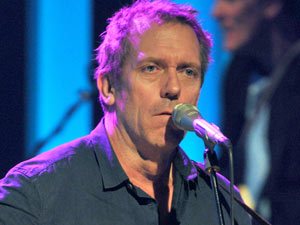
Hugh Laurie" Let them talk" by E. Paalberg


Hugh Laurie is mostly known as doctor House but already  in the serial we can see him playing the  piano and singing to himself. From the age of six Laurie took piano lessons with a Mrs Hare. He plays the piano, guitar, drums, harmonica and saxophone.  He is a man of many talents.

Now he has made a record and he is singing for all of us. His album „ Let them talk“ is smooth and simple yet interesting. His vocal is very good and it sounds that he is truly enjoying himself-he should because music suits him.And it's a bit weird that it doesn't feel like Doctor House is singing ,I mean it actually should feel like that to me because I'm not really seen a lot of his other movies or serials but when he sings it is easy to forget who is singing.Just listening some good blues that also suits rainy weather that we have here in Estonia.“Let Them Talk” is the first album to be recorded by Hugh Laurie after signing to Warner Bros Records in 2010. Produced by Joe Henry and recorded in Los Angeles and New Orleans, the album is a celebration of New Orleans blues.

All of his songs have some sort of similarity,some line that goes through them.Hugh himself thinks that it tells a story. Hugh Laurie is probably your best friend when you want a glass of wine. Song called „Buddy Bolden’s Blues“ is mellow and makes you feel like Hugh is singing next to you. Hugh makes you feel like you are not alone. Even though all the songs are covers it made me feel like they are fresh and first.


The album is quite instrumental and a lot of jamming is going on so there is something for friends of improvisation. For example the fifth song „ Battle of Jericho“ where the melody is simple, but what goes on between the lyrics makes you listen to it.
Some of the songs are collaborations with well known artists such as Tom Jones, Irma Thomas and Dr. John. Laurie plays piano and guitar on the album in addition to providing lead vocals.

The mournful "The Whale Has Swallowed Me," with its spare acoustic guitar accompaniment, is another chance for Laurie to shine as the lost, frightened narrator. A backdrop of shuddering fiddle and dobro gives the song an even more ominous tone.


Quite dramatical is the song called „Swenee River“ and dramatical in a good way. There is a strong deep start and then the party will begin but it is not the sort of party where you want to dance,it still makes you want to sit down and listen to jolly music.

So Hugh Laurie can relax your mind and take some pressure off and is a good friend from the start. He sings about everything-whales, church, friends, dancing. There is this one song „Police Dog Blues“  that just tells a honest story. It feels like everything is so real and simple so Hugh doesn’t have to make a big effort. Another good song is „Tipitana“ with a little twist that makes you love Hugh. It somehow shows his personality. But the song called“ The’re Red Hot“ is a bit too country for this album.
The last song in this album is a nice ending. It kind a refers to the name of the album and it makes you think:

“ Let them talk I’m just gonna listen to some music“.

Ellie Goulding "Lights" by Kadri Sibrits

Elena Jane Goulding was a student at the University of Kent, who one evening entered the university’s talent contest. Next thing she knows, she becomes the recipient of the Critics’ Choice Award at the BRIT Awards and her debut album Lights is number one in the UK Album Chart. Quite an impressive turn of events, isn’t it?

There are many reasons for Ellie’s sudden rise to fame. First of all, a producer called Starsmith must be named, he is the one responsible for adding infectious electronic beats to Goulding’s music and thereby turning simple acoustic songs into universal hits.

However, the fact that Ellie is a genuine singer-songwriter is equally important. Each and every track on the album was initially an acoustic melody on Ellie’s guitar. Folk music is something very close to her heart, and it is good to see that she has managed to stay true to herself while creating her sound, which has been categorized as ‘folktronic’ by some music critics. What is more, Ellie has said that she is the kind of person who wears her heart on her sleeve. She finds it impossible to sing about something that she does not believe in. Indeed, underneath the dancey beats, nice lyrics can be found. Not the most exceptional examples of poetry, but they definitely strike a chord with their sincerity and authenticity. Another, and perhaps the most distinctive reason why Ellie’s songs have been attracting the attention of the music world, is her unique voice, which is naively innocent, yet has a sense of soulfulness to it. Considering the above, it’s safe to say that Ellie Goulding isn’t your typical manufactured pop princess. She has a lot more substance than that, and Lights does a pretty good job showcasing it.

All ten tracks on Lights similarly consist of a simple yet haunting melody, catchy beats and a mix of subtle nuances. At times, however, the blend seems a bit too mechanical, making the end result sound somewhat artificial. Frankly, some songs would be better in their original acoustic version, without the interference of the producers. That being said, on most tracks the concept works. The opening track of the album, Guns and Horses, kind of epitomizes Ellie’s style: it’s a wonderfully folky song that begins with simple guitar and then gradually unfolds into a classic example of electro-pop. The eclectic Starry Eyed is one of the most captivating tracks, once its echoing harmonies start replaying in your mind, they are bound to stay there for days. Under the Sheets is another standout track in which the combination of infectious beats, a haunting melody and Ellie’s mesmerizing vocals is at its best, creating a distinctively Ellie-esque bittersweet atmosphere. In the lovely ballad The Writer, elements of folk music are strongly noticeable and the dreamy vocals beautifully capture the longing in the lyrics.

Lights is, with a few exceptions, refreshing and enjoyable. Not an album from where to look for a deeply moving musical experience, yet perfect for less refined listeners who allow themselves the simple pleasure of getting carried away by a catchy pop song. It’s definitely worth to give it a go, if nothing more, you might find yourself starry eyed for a while, and when you come to think of it, what’s so bad about that?

Borges goes to Rakvere

Comments on your reviews coming soon! Right now, I'm revelling in one of the most entertaining recent prose experiences - Mart Niineste reviewing Punk Song Fest. Scroll down here for reading the full review without having to get a full month's subscription (nutty paper!)

Friday, June 10, 2011

Dagö “Plaan Delta” by Kristiina Viinapuu


Dagö is the name of a band that every Estonian knows or, at least, has heard of. Two and a half years ago they went on a well-deserved break after having released 5 albums and a concert dvd+cd and performed on numerous festivals and summer tours in the past 10 years. But now they are back with new members expect for the backbones of the band - Lauri Saatpalu and Peeter Rebane. The fresh formation has brought with itself a fresh Dagö, which seems well rested and eager to show another side of their music without forgetting their beloved hits. The music seems to differ from the previous Dagö mainly because of different musicians playing it. Although, Saatpalu and Rebane are the same, the changes in the rest of the group have had a great influence on them. There have been constant changes in the members of the band and co-operated with other musicians like Kristiina Piperal from the Superstar Show and actresses Hele Kõrve and Eveling Pang, in the past. But what distinguishes Dagö from the others, is the duo Saatpalu-Rebane and the rest of the band contribute to their talent. Dagö at its best is by themselves doing their own thing and that is what can be found from their latest album Plaan Delta.


The album was released in the spring of 2011 but the new songs were already tested on their audience almost six months before with concerts in Tartu, Tallinn and Viljandi. I was lucky enough to see them in Tallinn, six meters underground in Hell Theatre – a venue of Tallinn City Theatre – and with those few months they have come a long way, as in December it was clear that they had been only in the studio for quite a while and their performance was greatly affected by it, especially when they started to play the older songs. But by April the new members had learned all the necessary pieces and perfected themselves to a point where the performance was complete.


The 12 tracks on Plaan Delta are all separate pieces that have blended into one unity, which makes listening to it a time well spent. I would rather to start with my least favourite track – Migreen – it is just one of those songs I have a hard time relating to. Most probably it is because I do not suffer under horrific migraines and therefore, I do not know if you do feel as if “a punch of guys trample on the attic of my asylum and they shout me into a corner, me inside my own head”. But like many songs by Dagö, this one also ends up focusing on social problems – the migraine of our society where everyone and everything seems sick from certain angles.


The title song of the album captured my attention with the masculine background vocals. It is something I have not noticed about them before, but I guess this is the first time they realised to skilfully use their musicians’ voices. The same is done in a few other songs, such as Klaipeda and Veneetsia. The focus on different geographical places is something new in comparison to the ‘old Dagö’. In addition to connecting their music to Klaipeda and Venice, they introduce Corfu and Estonia in songs Korfu and Minu Eesti. The latter seems to be influenced by the patriotism that has widely spread in the last few years. But all these place-related songs deal actually with the human nature and the different aspects of it. It is something very characteristic of Dagö, but as mentioned before they express it somewhat differently than before. Of course it would not be Dagö if they did not manage to connect the individual to the society and they find that connection by observing other people in their songs.


The most socially critical song seems to be Kultuuripealinn, which clearly refers to Tallinn being the European Capital of Culture for 2011 and it lively describes how the culture is only on the outside so that everyone can see how cultural we are. In my point of view this song justifies itself, as a great deal of this has been blown out of proposition. Festival is another critical song that is approached from a rather sarcastic angle. It is a situation that they have found themselves in for several times and likely will find again. But among all the sarcasm, there is sweetness introduced by a young girl in the front row. She is the one who lightly sways to the music and cannot take her dazzled eyes of the lead singer – a scene I have witnessed during most concerts I have been to.

The most memorable song on the album is Hakkaja as it truly binds together the masterful guitar skills of Rebane and the simple but meaningful lyrics of Saatpalu. At first hearing it at a live concert, it impressed me so much that it stayed with me for months and luckily the studio version did not disappoint at all.


Dagö – an island from where the Sun raises aka Hiiumaa. And truly the Sun has risen again with Dagö and brought new light to them. Although much seems different, it is still quite the same, but it is delivered in a different package. The album Plaan Delta clearly shows that they have not been twiddling their thumbs for the past two years, but have added new values to their renowned quality. It is interesting to see how they will continue from this point on and the first opportunity to compare the new and the old is this July when they go on the tour Plaan D with Bonzo and Tõun.

Thursday, June 9, 2011

Agnes Obel "Philharmonics" by Gerda Jürimäe

The Danish singer-songwriter Agnes Obel’s debut album Philharmonics was released in October 2010 and certified double platinum by February 2011. The record contains eleven titles of Obel’s own creation, three of which are purely instrumental, and a more rhythmic or perhaps even more dramatic and temperamental cover of John Cale’s I Keep a Close Watch, shortened to just Close Watch on Obel’s record. The length of the songs, ranging from a minute and a half to a few seconds over four minutes, is nothing unusual.

After choosing this record for my review already weeks ago, I kept postponing and procrastinating, partly because other things kept coming up, but mostly because it seemed very hard to put my thoughts about it into words. So, having had the twelve tunes on repeat for several days (and they did NOT end up making me flinch every time the first track started again – and still don’t, actually, so that’s high praise from my part), I finally decided to take Obel’s own advice and go listen to them down by the riverside.

As seems to be the case with most of my music, I found Obel via Grey’s Anatomy. When I first heard Agnes Obel, the thing that came to mind was that she is kind of the rural to Regina Spektor’s urban. And indeed, her simple and charming melodies that are dominated by the piano – for example the lovely Just So


- make me think about summer and poppy fields and – for some reason – wild strawberries. Although, this connection might have something to do with this outrageously good weather we have here right now… In any case, this is the perfect record – at least for me – to listen to on a summer day too hot to do anything else than lie around and ponder upon life.

The record starts with the shortest tune, the instrumental Falling, Catching which, with its trilling and somehow also languid piano, sort of sets the mood for the entire collection as dreamy and nostalgic. This is quite smoothly carried on by Riverside, the first “proper” song on the album. 


Having put this video here, I just have to say something about it. To put it simply, this is easily the most remarkable music video I have seen all year; my compliments to whoever came up with the idea of producing a clip that creates the air of times and summers long passed for this song. The song and video together seem to tell us of just a fragment of a story – but whatever that story is, I’ll leave for each of you to find out for yourselves.

The two following songs, Brother Sparrow and Just So, that tell of concrete, blue sky, sparrows, lemonade, the break of the day and half-awake moments really turn up the summeriness of the record. In Avenue – one of my favourite pieces on the record – Obel says in her mellow voice but, hey, we need to be somewhat foolish, feeble-minded, wrong and senseless again confirming my thought that this is a very summery album.

And if I was unsure of the fairytale-like air of the album before, then Beast definitely – with its lyrics talking of beans and beasts – made me more certain. Obel herself has said that she gets part of her inspiration from folklore and that can quite easily be heard when listening to the album; however, it is not the classic princess-and-prince-live-happily-ever-after fairytale Obel tells us, but a bit more complicated: Over the Hill speaks of longing, Close Watch of being careful and of the similarity of right and wrong, as does Avenue.

Although her melodies seem gentle and breezy, Louretta, for example, an instrumental piece – carries certain bitterness. The title track Philharmonics has the same feel to it; it has quite grim lyrics – like most original folk tales before Disney got to them – and the melody is mysterious and haunting, as if the piano passages told us something more than the lyrics. The last song, On Powdered Ground is somewhat melancholic, and if I had to pick the angriest tune from these twelve calm angel-voiced and piano-accompanied tunes, I would pick this one.

After sitting by the riverside and almost being devoured by mosquitoes, these are some of my thoughts on Agnes Obel’s first record. To those of you into the genre I call angel-voiced-ladies-with-pianos-and-or-guitars, Philharmonics is a worthy addition to your music collections. And considering that this is only her first record, I cannot even imagine what more is on the way.

Tuesday, May 31, 2011

TV on the Radio "Nine Types of Light" by Maili Vaard


Accessibility can be both a blessing and a down-grade of its own kind. In fact, the more you have to take a proper plunge in order to get access to certain sounds, lyrics and music in general, the more sweeter the taste will probably be. The phenomenal taste of funk mixed with some ironic grudge, meaning TV on the Radio’s latest release and the most accessible one aswell, blows up all taste buds in a quite orgasmic way. And with a cherry on top.

TV on the Radio is a group of funky Brooklyneers, Tunde Adebimpe, Kyp Malone, Dave Sitek, Jaleel Bunton and Gerard Smith, who pull electronics, indie guitar rock, free jazz, funk, soul and a cappella doo-wop vocals out of their hats. As eclectic as it sounds, one must imagine this to be as synonymous to a melting pot as it can possibly be. And it truly is. No hesitations here, nor any over-wording. Meanings are all at their high at this point.

The newest as well as the fifth album, Nine Types of Light, is the follow-up to the band's overwhelmingly beautiful 2008 release, Dear Science, and proved to be its breakout release. Making a big entrance, it was named album of the year by MTV, Spin, Entertainment Weekly, Pitchfork and the grand old man, if I may, Rolling Stone. And the group touring behind the album sold out a year's worth of live shows across the world. Eat your heart out. This particular album bears a mushy undertone, with different hints to issues concerning the self-exploration of one’s heart. So this may seem odd.

It is odd. Of course it’s odd. Listening at this point is crucial. And VOILA! A pinch of sugar and spice and a cautious amount of chaos. Last of which leads to the realization, that change does not necessarily mean bad. It means it is time for some groove and irony. Future-funk and energy at its peak.

Nine Types of Light has a list of songs, which to an avid listener might at first seem as a contrast of some sort. Referring to the lyrics, of course. [Drum-rolls] : Love? That’s right! Take into consideration that the lyrics have a great deal of avant-garde-like and poetic charm in them. Instruments have a high vibe and are full of energy. The whole mixture of the instruments and melodies have an artistic palette to them, full of colors and simple-chic tones. Female voices raised at this time.

Reaching the point where the play-button is pushed, the songs all have a slightly lighter sound to them than an amount of previously released tracks. “Will do” is the first single off the album. Cutting to the chase – fuzzy and beautiful and…

"I'll be there to take care of you if ever you should decide that you don't want to waste your life in the middle of a lovesick lullaby"

…with a hint of straightforward sarcasm.

At the end of the album, when all is eaten up and given a chance to grow on you in a pleasant and soaking way, it will be felt that there are probably much more than nine types of light here. Fact.

Friday, May 27, 2011

Lady GaGa "Born This Way" by Hendrik Koger


Anyone in search of a good melody need only put on "Poker Face" or "Paparazzi or... Is there any more? A load of choices presents itself on Lady GaGa's 2011 Born This Way.

What is unnerving, however, is the feeling that she is viciously copying every classic pop song ever recorded and this suspicion is only fortified by the mastery of their concealment. Fortunately, the nifty tunes on the album soon make the prejudice and criticism vanish in the sheer beauty of the music. The lyrics are still quite banal and don't leave much for imagination but serve their purpose well to function as vessels for vocal delivery. But hey, Gaga is a socially-conscious pop star and probably understands what people want. Nearly all the songs on the album would sound good on the radio and on the dance floor as well as blasting from an aging rocker's stereo. "Electric Chapel" makes an evident nod towards guitar rock with its driving riff and "The Edge of Glory" effectively manages to fuse club music and classic rock with its anthemic chorus and a sax solo that almost seems to be the perfect extension of "Born to Run". Come to think of it, Clarence Clemons, the saxophonist of Springsteen's The E Street Band performed solos in both songs. The bizarre form of sincerity that GaGa has adopted elevates the album to the status of a statement, which couldn't be reached by her previous releases. A statement that nevertheless remains obscure aside from its obvious message: enjoy.

The heart-warming charm of the album comes from GaGa's soulful performance, leaving an indelible impression that she actually might mean what she is singing. Lady Gaga is a clear sign that pop's glory days are not over but poses a dilemma: what will the other girlies who'll follow suit and start imitating her eventually bring pop to? No worries. Gaga is still young and still very much here.

Thursday, May 26, 2011

Kings of Leon "Come Around Sundown" by Hendrik Koger


Come Around Sundown, released in 2010, will probably delight those who liked the band's 2008 Only by the Night and alienate the fans of their early efforts.

When the rolling mass of "The End" starts to sink in you may start to wonder whom KOL are ripping. And then your thoughts might also wander towards the same way during "Pyro". Ah, yes. "Drive" by The cars. A good source indeed if it's done well. And in this case it is. The band members themselves have described their sound as having a beachy groove to it, which is right on, because the fluidity of the tunes and watery instrument textures are as soothing as they are lukewarm and flat at times. The concise rock format the group adopted on its previous release Only by the Night is firmly asserted throughout the record and leaves little trace of their early garage vibes. Lyrical themes remain close to life and refrain from being too vague, which some might call a good thing. Kings of Leon has a generally likable fusion of U2, garage, southern and alt-rock; that is to say that classification is pointless and that the band comes across as honest with all their influences and provides a hopeful change for the ones not too keen on squeaky indie bands.

However, if you don't dig the boys' mix you can always go "Back Down South" and listen to Skynyrd.

Friday, May 20, 2011

Molly Nillson "These things take time". Review by Malgorzata Giec

One (wo)man band, Molly Nilsson, is a very mysterious artisit. There is very little about her in the Internet. Trying to google her name( or maybe artistic nick nickname?) one will not find much. Only laconic mentions, obsolated tour dates. Nothing... even the myspace adress seems to be out-of-date. But such appearances can be misleading. The fact that she does not care about that does not mean that she is lazy or retired. YouTube is full of Molly Nilsson's music clips. She also gives concerts all time. The strange thing is why such a talented song writer, composer, musican an singer does not seek popularity and fame.


Recording under her own label DARK SKIES ASSOCIATION, Molly Nilsson makes her own music totally indepedent. And that feeling of intimacy, privacy and sincerity makes her first album 'These things take time', recorded in 2008, very special. Some may think that such synthetic art-pop is grandiose. Maybe that it is a little bit kitschy... But I can't imagine anyone saying that this album is commercial. Obviously it was recorded with the urge to express artist's feelings, emotions exacly as she wanted to do so. Involving anyone else in her musical project shows that Molly Nillson doesn't accept compromises. That makes her record completely authorial which doesn't happen very often these days. Born in Sweden, she is now living in Berlin which is a great mix. Sweden's music industry is recently very appreciated even out of Europe. Everyone who tries to be up to date with recent releases is familliar with such names as Lykke Li, El Perro del Mar or Little Dragon. The successes of these music projects is the outcome of great, soft and pleasent female vocals. If so, why did Molly Nilsson decide to make her music in Germany? Maybe she feels better to create in a land of vocalists that have much more in common with electro music, such as Barbara Morgenstern, Miss Kittin, Soffy O... For sure Molly Nilsson fills the gap between these two ways of expression.


'These things take time' starts with opening song ' The lonely' which sounds like an electro- cabaret. The three next songs are also pretty much in this style. While listening to 'The Diamond song', '800 days' or ' Wounds itch when the heal' it is possible to have a film frames from The Cabaret in front of an eyes. The fifth song 'Whiskey sour' is bit different. Only the lyrics and vocal matters, music is just a background. It is a beatiful track about loneliness, night big-city life. Molly sings: „I would have called you if I had some credit on my phone. I always feel so stupid in a bar all alone” with such a sad voice that listener can easily imagine a lonely women getting drunk at the bar while waiting for someone who had never showed up. The seventh track 'Won't somebody take me out tonight' is a great combination of lyrics, vocals and music. Every one of these ingrediants separately would not be so impressive but together they form an outstanding, simple ballad. 'Hey moon!' seems to be the saddest from the whole album, the tune sounds like lullaby but it's cleary about a girl who can't fall asleep because she is thinking of someone while looking at the moon...


Molly Nilsson's debut album shows that simple music may be very touching and extremely good if it is made with heart. Album 'These things take time' also makes me think that massive studio with a bunch of proffesionalists in it is not crucial when we are dealing with one talented person. But it also makes me sad that very often such gifted people have to choose between recording under their own conditions and popularity.


Molly Nilsson- (Won't somebody) Take Me Out Tonight music video